When most people buy a home, they assume a clean seller disclosure means there are no major surprises waiting for them after closing. Unfortunately, that is not always the case. We recently worked with a Lakeway, TX homeowner who purchased a 2,700-square-foot home that appeared completely normal on paper. Nothing in the seller disclosure suggested a history of water damage. Like most buyers, she completed a standard home inspection before closing and moved forward believing she had done everything right. Less than two years later, she had spent more than $30,000 out of pocket on mold testing, remediation, reconstruction, HVAC work, leak investigations, and specialty inspections. Insurance covered additional costs as well. But this story is not really about money. The reason this homeowner kept searching for answers was because of what was happening to her children.
When the homeowner purchased the property, there was no indication that the home had a significant water damage history. As far as she knew, she was buying a well-maintained home that had passed a traditional home inspection. Like many buyers in the Austin real estate market, she relied on the information available during the transaction and moved forward with confidence. What she did not know at the time was that a reported major water event had allegedly occurred a full decade before she ever owned the property. In conversation with a neighbor, she learned that the previous owner had experienced a water heater failure in the attic that had water spilling out of the garage in a massive leak. The owners were not living in the home during the leak so it was unclear how long the leak had been active before it was discovered. Mold can grow in 24-48 hours so it is very possible that mold growth began before the homeowners even returned to deal with the leak. The homeowner tried to track down the previous owners and other parties involved to find out more about this incident, but hit dead end after dead in her search for more information.
The leak had occurred roughly ten years earlier which meant it was outside the applicable disclosure period of five years and was therefore not disclosed during the sale. This is one of the most important lessons homebuyers need to understand. A clean seller disclosure is not the same thing as a clean house!! Seller disclosures are legal documents, not environmental assessments. They do not guarantee that a home has never experienced flooding, water intrusion, roof leaks, plumbing failures, HVAC contamination, or mold growth.
Not long after moving into the home, the homeowner experienced a dishwasher leak. The repair was delayed because replacement parts were backordered. Later, the dishwasher leaked again and flooded portions of the kitchen and island. Baseboards began swelling and flooring was damaged. Portions of the home were opened up and remediated. The homeowner was told the problem had been addressed. Then another issue surfaced. The primary bathroom shower was initially described as a mildew issue. A later investigation revealed a failed shower pan liner and mold contamination behind the shower assembly. As the months passed, the homeowner found herself trapped in a cycle that many homeowners know all too well.
A leak would be discovered. Repairs would be completed. Testing would be performed. Everyone would assume the problem was solved. Then another piece of the puzzle would appear.
At the same time these building issues were being investigated, the homeowner became increasingly concerned about her children's health. Her son developed a chronic cough that would not go away. Her daughter began experiencing fainting episodes. As remediation efforts expanded, the family ultimately moved out of the home while repairs and reconstruction were completed. They remained out of the property for approximately seven months. During that time, the homeowner reported that her children's symptoms improved. Like any parent would, she hoped that once the remediation work was completed and the family returned home, life would return to normal. Instead, she found herself facing an unsettling pattern. After moving back into the home, she reported that symptoms that had improved while they were away began returning. At that point, the issue was no longer about drywall, flooring, or construction costs. It became evident that something further was continuing in the home that was not fully addressed. The homeowner began to consider mold.
When House of Thyme Mold Inspections became involved, multiple contractors, inspectors, testing companies, and remediation firms had already worked on the property. The homeowner had already invested substantial time, energy, and money trying to identify the root cause of her concerns. Kitchen remediation had been performed. The shower had been rebuilt. HVAC remediation had been completed. The plenum had been replaced. Ductwork had been cleaned. Walls had been opened. Flooring had been replaced multiple times.
Yet one question remained: Had everything actually been found? That is where a comprehensive mold inspection becomes critical. The goal is to understand the entire history of the home, identify moisture sources, evaluate the building envelope, assess the HVAC system, and determine whether hidden contamination may still exist.
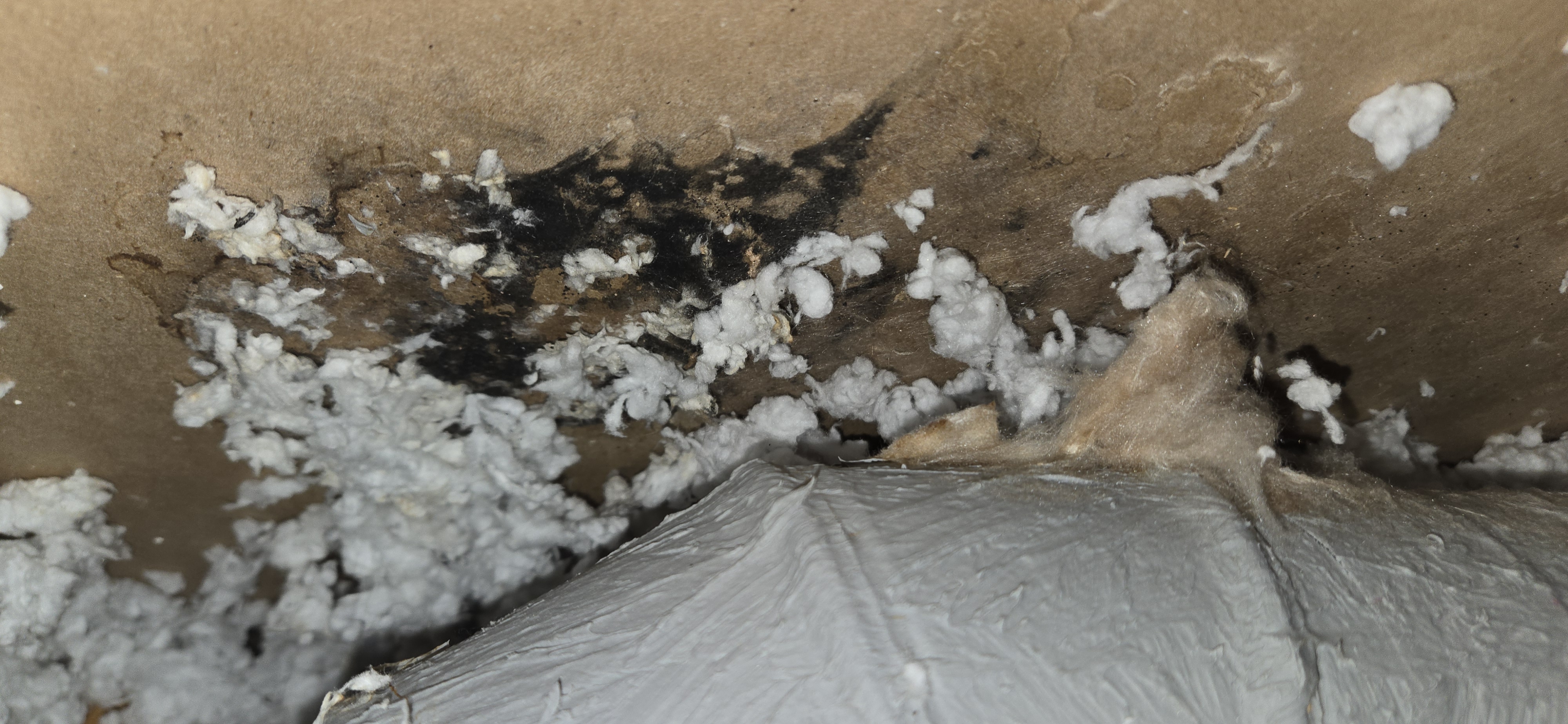
When we conducted our assessment, several indoor air samples appeared relatively clean. Many homeowners assume that clean air testing automatically means there is no mold problem. That is not necessarily true. Air sampling is a useful tool but cannot be relied upon in isolation. During our investigation, we identified active fungal growth on the attic side of drywall above the son's bedrooms. We also identified mold growth associated with HVAC components and additional moisture concerns that warranted further investigation. The most important findings in this home were not discovered by an air sample. Visual inspections with proper inspection technique is often the most important way to find the moisture source in the home.
After our investigation, the homeowner finally had a clearer roadmap forward. Localized mold remediation was recommended for the attic-side drywall above the son's bedroom where active mold growth was identified, along with additional HVAC evaluation and cleaning to address contamination associated with the system. We also recommended ERMI/HERTSMI-2 DNA dust testing in key areas of the home to determine whether mold commonly associated with water-damaged buildings was still accumulating within the living environment. Additional investigation was recommended for moisture concerns identified in the primary bedroom wall assembly. This is due to poor building design (building envelope failures). iWhile the findings provided important answers, they also reinforced an important reality: in complex homes with a history of multiple water events, remediation projects, and ongoing concerns, solving the problem often requires continuing to follow the evidence rather than assuming the issue has been fully resolved.
Austin's real estate market is expensive. Buyers spend many hundreds of thousands of dollars or even million of dollars on a property. Yet many buyers hesitate to spend an additional $500 to $1,000 on a comprehensive pre-purchase mold inspection. We believe that can be a costly mistake. Especially in families with existing health concerns. A standard home inspection serves an important purpose, but many low-cost mold add-ons consist of little more than a quick walkthrough and a small number of air samples.
A proper pre-purchase mold inspection should evaluate:
The goal is not to determine whether mold spores are floating through the air during a short inspection window. The goal is to identify risk before the home becomes your responsibility.
*For why we don't recommend you use the mold inspector recommended by your realtor, click here
This homeowner's story is a reminder that some of the most important information about a house may never appear on a seller disclosure. A clean disclosure does not necessarily mean a home has never experienced significant water damage. A clean disclosure does not necessarily mean a home is free from mold concerns. And a standard home inspection will likely not uncover every issue that could impact indoor environmental quality. Before purchasing a home in Austin, Lakeway, Dripping Springs, Bee Cave, Cedar Park, Round Rock, Georgetown, or elsewhere in Central Texas, consider investing in a comprehensive mold inspection and moisture assessment. The cost is small compared to the potential consequences both in money and in health. When it comes to hidden water damage, it is always better to find the problem before closing than after. And as this homeowner learned, it is important to inspect the house itself, not just the paperwork.

.svg)


Texas Department of Licensing and Regulation (TDLR)
Mold Assessment Company: #ACO1327 Exp 09/28
Mold Assessment Consultant: #MAC2207 Exp 11/27
TDLR Consumer Mold Information Sheet
House Of Thyme ® 2026. All Right Reserved.