Austin's Building Science Mold Inspections • We Find the Source, Not Just the Mold



MOLD INVESTIGATIONS
IN BEE CAVE, TX


BEE CAVE'S MOLD INVESTIGATORS.
.png)
.png)
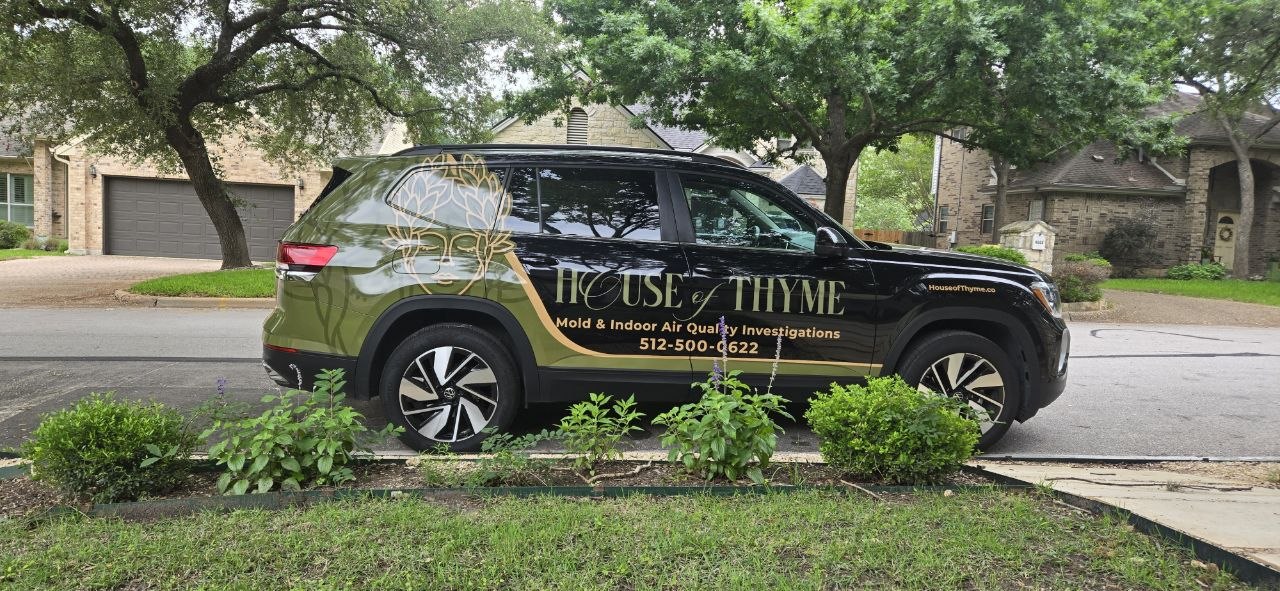
A Building-Science Approach to MOLD INVESTIGATIONS
MOLD SERVICE PACKAGES AND PRICES
TARGETED MOLD
One specific area of concern
What We Check
Laboratory Testing
Your Results
WHOLE HOME MOLD
Concerns in multiple areas or no clear source
What We Check
Laboratory Testing
Your Results
MOLD & AIR QUALITY
Unexplained symptoms or broader air-quality concerns
What We Check
Laboratory Testing
Your Results
Want a detailed breakdown of inspection and testing costs? Read our Austin Mold Inspection Cost Guide →
GETTING STARTED IS EASY
.svg.svg)
.svg.svg)


WHY WAITING IS RISKY
EXPERT TECHNICIANS

TYPES OF MOLD TESTS WE USE

FREQUENTLY ASKED QUESTIONS

.svg)
We will walk you through options and next steps that will change depending on the extent of the findings.
You’ll typically receive your report within a week. If we conducted an ERMI dust test it may take up to two weeks due to longer laboratory processing times. However you can have faster processing times if you are willing to pay the expedited fee for faster turnaround time from the lab.
Yes. We can repeat testing after remediation to verify the home is back at normal indoor concentrations based on the prescribed mold protocol. This is often referred to as Post-Remediation Verification (PRV) testing.
Yes. We can create a remediation protocol for your mold remediation contractor.
Yes. We require an adult to be home during the inspection.
Yes, this is fairly common. A musty odor is often one of the first signs of hidden moisture or mold. During the inspection we look for moisture, hidden leaks, HVAC issues, and other conditions that may explain the odor, even if mold isn't visible to you. We will ask you questions about the history of the home and health symptoms of the various family members as these are clues for us that help guide the investigation.
Yes. Mold spores are naturally present in outdoor air and make their way into every home. The goal isn't to have zero mold. The goal is to make sure there isn't hidden mold growth caused by excess moisture or water damage. During our inspection, we look for signs that mold levels or moisture problems are outside what we'd normally expect.
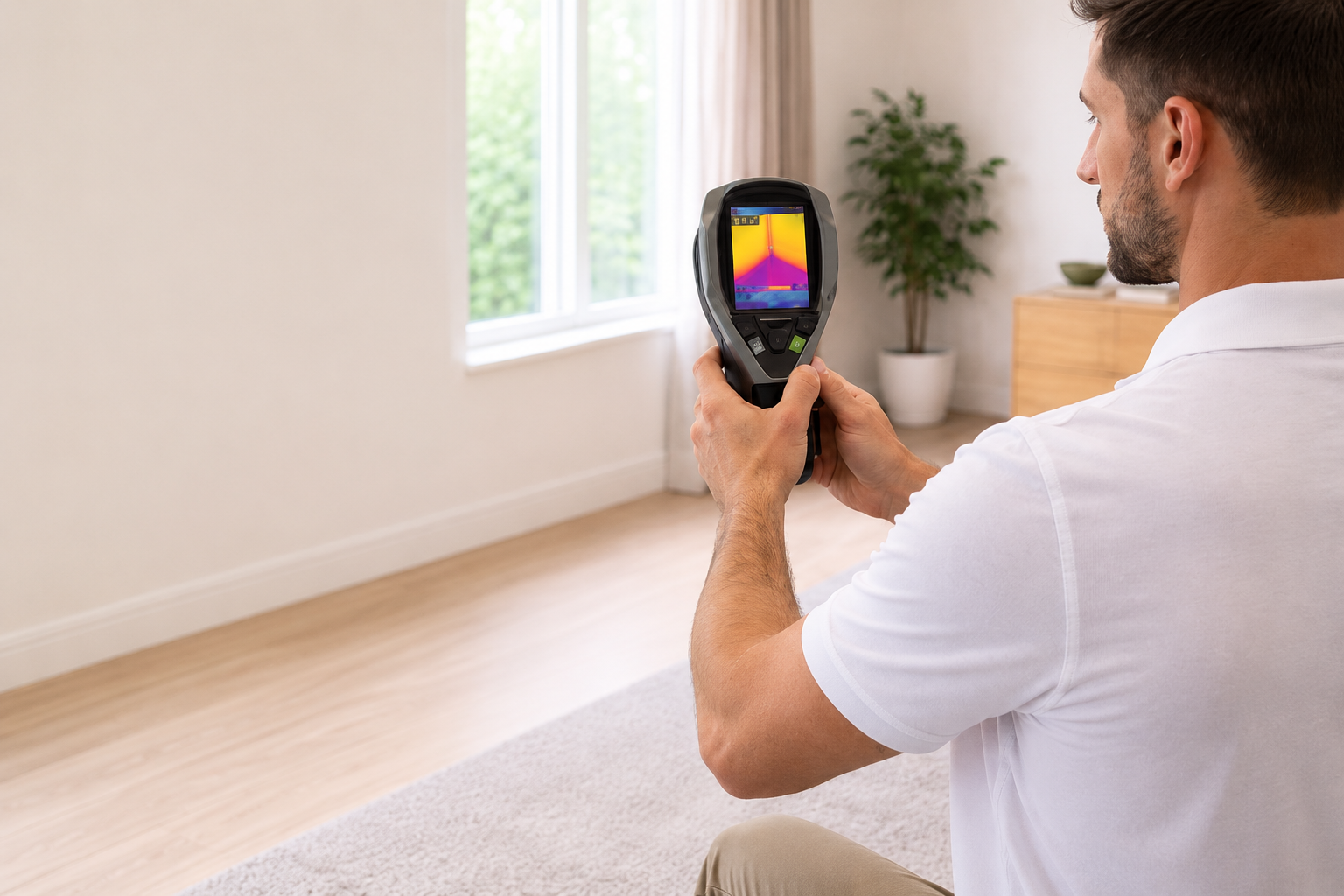
Yes. Mold often grows in places you can't see, including behind drywall, under flooring, inside ceilings, or around plumbing leaks. We use moisture meters, infrared cameras, and, when appropriate, a small inspection camera to investigate hidden areas without unnecessary damage.
We start with a detailed visual inspection inside and outside the home. We use moisture meters and infrared cameras to look for hidden moisture. If we find evidence of a hidden problem, we may recommend using a small borescope camera to look inside the wall or ceiling. Laboratory testing can also help identify airborne mold or confirm suspicious growth.
Usually, yes but not always depending on the location of the mold. Most of our inspections are non-invasive. We use specialized tools to identify areas of concern without opening walls. If our findings suggest that looking inside a wall or ceiling would provide valuable information, we'll discuss with you first and only proceed with your permission. These are small holes we make in the wall that allow us to look behind the wall or ceiling with a camera and also take an air sample, but if you do not want us to make a hole or perhaps are a tenant, that is fine we will continue our investigation without it. There are certain investigations that do require a more-invasive approach to locate the mold. We will let you know if this is your situation. For instance we can see lots of moisture underneath the floor but you would need to lift the floor up to get to it.
The right test(s) depends on your situation. Air samples help evaluate what may be circulating through the home. Surface samples help identify visible growth. ERMI testing measures mold DNA in settled dust and may be helpful in certain situations. Our technicians will let you know what testing is appropriate based on their visual inspection. In addition, during our phone consultation we will discuss the testing that may be appropriate based on your situation.
Usually not, but it depends on your insurance policy and the cause of the damage. Some policies may provide coverage for sudden water events, while others exclude mold entirely. We recommend contacting your insurance company to understand your specific coverage.
We inspect both the interior and exterior of the home. Depending on your concerns and the inspection package selected, we may also inspect attics, HVAC systems, crawl spaces, and other areas where moisture problems commonly occur.
If your doctor has identified possible mold exposure, a mold inspection can help determine whether your home may contain hidden moisture or mold growth. Finding the source (ie. home, work or school) is necessary to ensure you are spending time in environments that will allow your body to heal.
Yes. Your HVAC system is an important part of every whole-home mold inspection. We inspect accessible components such as the air handler, plenum, evaporator coil area, and ductwork where possible, looking for moisture problems, microbial growth, and conditions that could be affecting your indoor air quality.
Not always. If mold growth is obvious, testing may not change what needs to happen next. In many cases, the priority is identifying why the mold developed and addressing the moisture source. However, testing can still be helpful in certain situations, such as determining the type of mold present, documenting conditions for a real estate transaction, investigating health concerns, or verifying whether mold has spread beyond the visible area.
These terms are often used interchangeably, but they aren't exactly the same. A mold inspection is a comprehensive evaluation of your home that includes looking for moisture sources, visible mold, and building defects. Mold testing is just one tool that may be used during the inspection, such as air samples, swab samples, or ERMI dust testing. A mold assessment is another term commonly used to describe the overall investigation and evaluation of the home.
AREAS WE SERVE


GET A QUOTE NOW

.svg)
Mold & Indoor Air Quality Testing


Get monthly tips on your healthy home
Texas Department of Licensing and Regulation (TDLR)
Mold Assessment Company: #ACO1327 Exp 09/28
Mold Assessment Consultant: #MAC2207 Exp 11/27
TDLR Consumer Mold Information Sheet
Bee Cave, TX 78738
House Of Thyme ® 2026. All Right Reserved.